Hypothetical: the gas dial on a tank you just inherited sits on “B.” A water heater temperature setting chart puts that near 140°F, while most homes need only 120°F. At 140°F, the scald table GE Appliances publishes (from Shriners Burn Institute data) gives less than 5 seconds before a serious burn. At 120°F, the same burn takes more than 5 minutes.
People usually leave the dial high for one of two reasons: they keep running out of hot water, or they heard hotter water is cleaner. Both concerns have real numbers behind them, and both have fixes that do not involve a 140°F faucet in the kids’ bathroom.
Dial temperatures below come from a State gas water heater manual and burn times from GE’s published scald table; federal guidance was read on Nov 3, 2026.
The water heater temperature setting chart, letter by letter
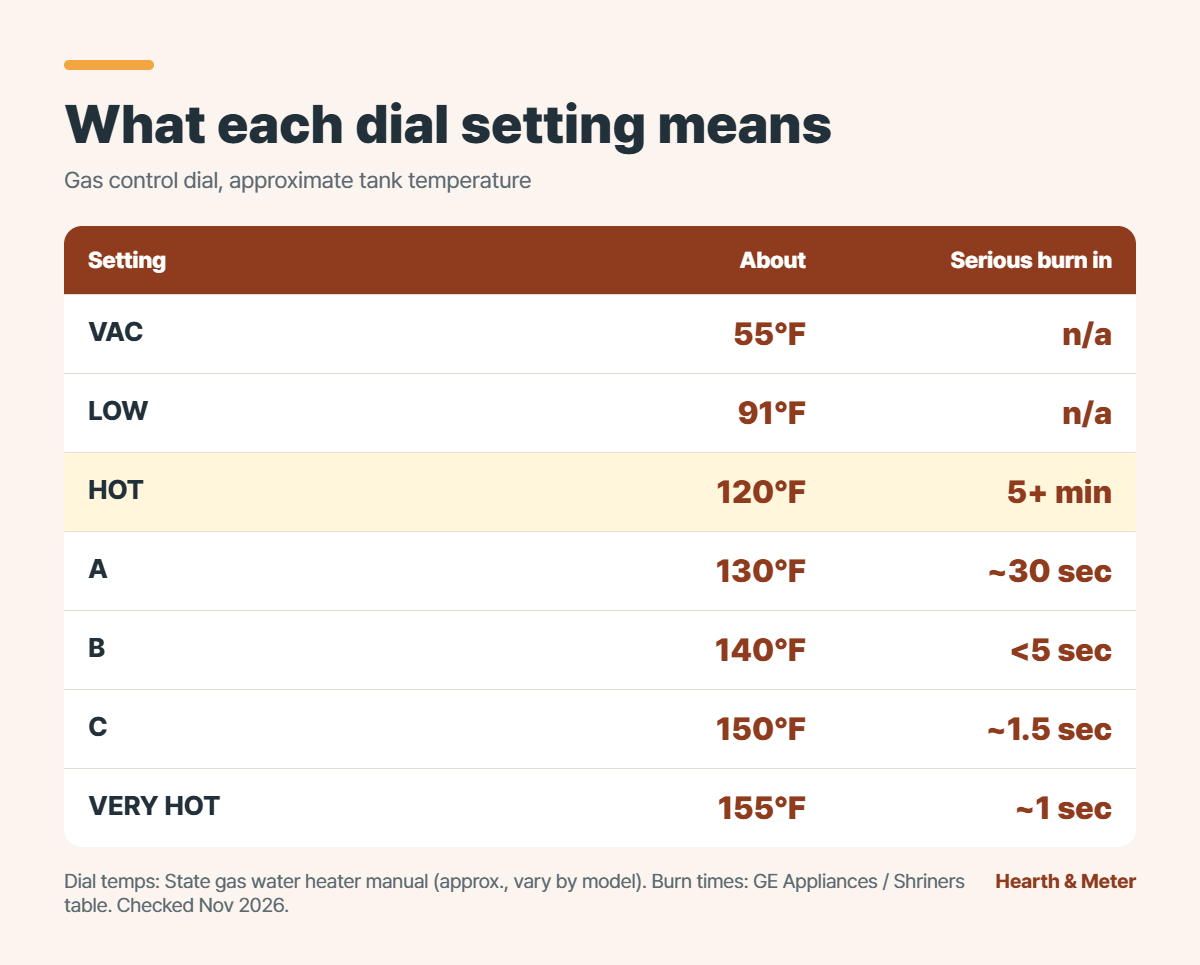
The State residential gas water heater manual lists what each position on its gas control knob means. The manual calls these approximations, and other brands mark their knobs differently, so treat the letters as a starting point and the thermometer (covered further down) as the final word.
- VAC, about 55°F: for trips only. Nobody should be showering on it.
- LOW, about 91°F: lukewarm, and inside the 77°F to 113°F band where CDC says Legionella bacteria grow best. Not a daily setting.
- HOT, about 120°F: more than 5 minutes of contact before a serious burn. This is the setting federal guidance points to.
- A, about 130°F: about 30 seconds.
- B, about 140°F: under 5 seconds. Also the storage temperature health agencies mention for Legionella control, which is why it comes paired with mixing valves.
- C, about 150°F, and VERY HOT, about 155°F: roughly 1.5 seconds and 1 second.
CPSC’s tap water scald sheet uses slightly different exposure times for third-degree burns in adults: 2 seconds at 150°F, 6 seconds at 140°F, 30 seconds at 130°F and 5 minutes at 120°F. The two tables disagree on exact seconds but agree on the shape of the curve. In both, each 10-degree step above 120°F shrinks the time you have to react at least threefold.
Why 120°F is where federal guidance lands
The Department of Energy’s Energy Saver guide (page 18) tells homeowners to set the water heater to 120°F, “a temperature considered safe for most of the population,” and notes that water heating is the second largest energy expense in a typical home at about 18% of energy use. CPSC goes further and urges all users to lower their water heaters to 120°F, pointing out that most tap water scald injuries and deaths involve older adults and children under five.
Manufacturers ship close to that line. GE’s water temperature support page says its thermostats leave the factory at 120°F and can be adjusted between 90°F and 150°F on electric thermostat models. Rheem’s and GE’s manuals carry the same warning: households with small children, disabled or elderly people may need 120°F or lower. A dial above HOT may have been turned up by an installer or a previous owner; the thermometer check further down shows where the water really is.
When a hotter tank makes sense, and what has to come with it
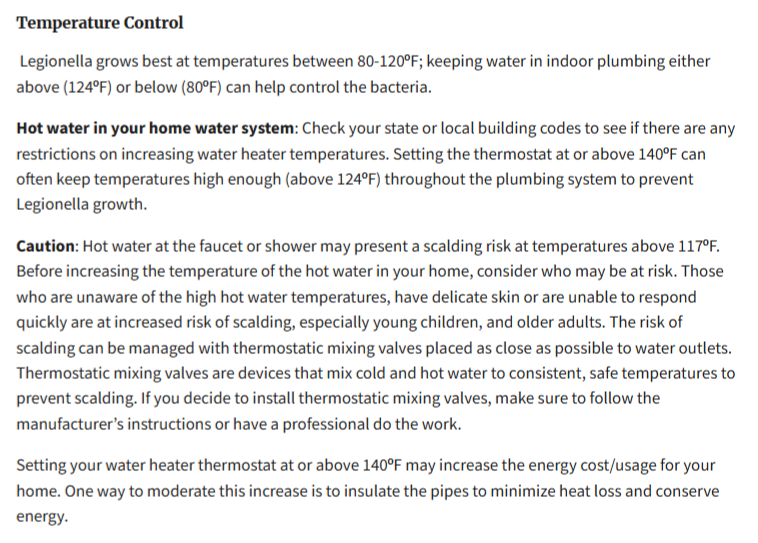
There are legitimate reasons to store water hotter. The State manual lists dishwashers and laundry machines that want hotter water, more usable hot water from the same tank, and less bacterial growth, including the bacteria behind “smelly water.” CDC’s fact sheet for rental hosts says to keep a water heater at or above 120°F to limit Legionella and adds that 130°F to 140°F kills many harmful germs while raising scald risk. EPA’s Legionella page says a thermostat at or above 140°F can often keep water above 124°F throughout the plumbing.
Each of those sources attaches the same condition: if the tank runs hotter than 120°F, the water reaching faucets and showers should be tempered by a thermostatic mixing valve. DOE’s federal buying guidance for water heaters quotes the Defense Department’s facility criteria: store at no less than 140°F, then set the mixing valve downstream to 120°F. The State manual adds that, under the ASSE 1070 standard and most local plumbing codes, the tank thermostat should not be the only thing standing between a person and scalding water.
A mixing valve goes into the supply piping, so EPA’s advice is to follow the valve maker’s instructions or have a professional do the work; in most homes that means a licensed plumber. If someone in the house has a medical condition that makes infections more dangerous, ask their doctor which matters more for them before choosing a setting.
Will 120°F make you run out of hot water?
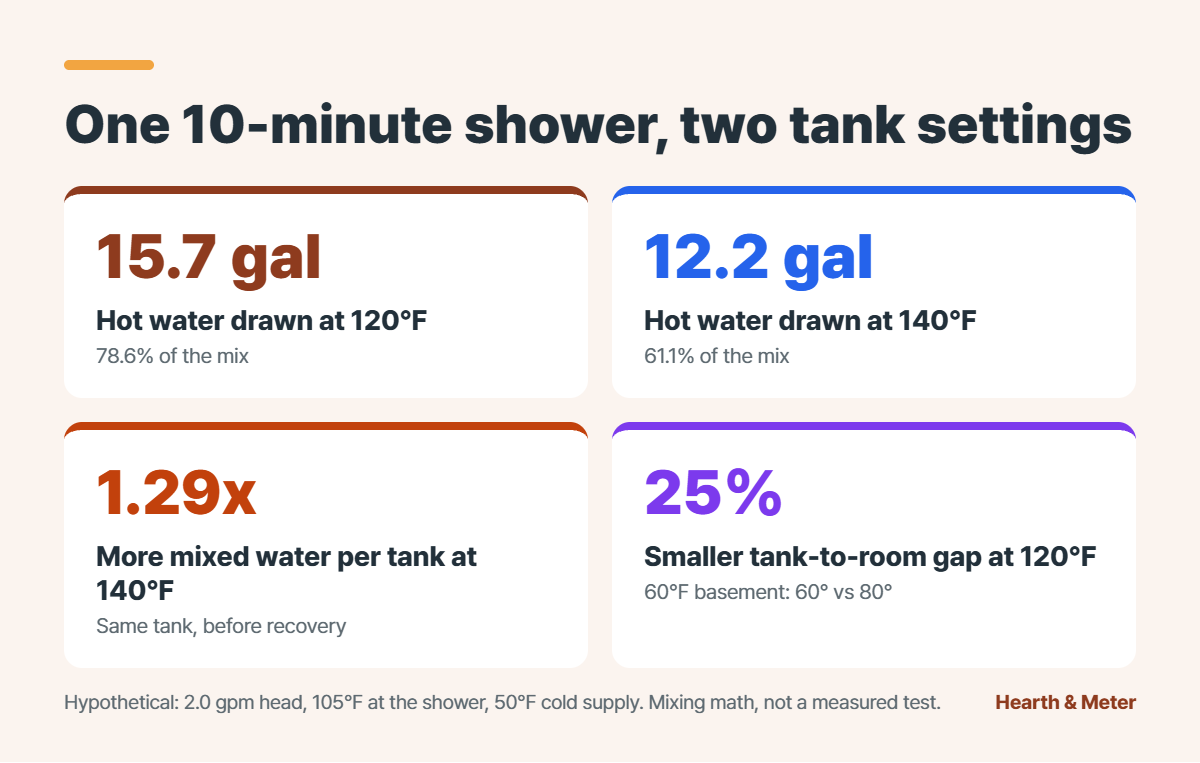
Partly, yes, and the reason is mixing. A shower blends hot and cold water to the temperature you like, so a hotter tank needs less of its own water for the same shower. Take a hypothetical 10-minute shower at 2.0 gallons per minute, mixed to 105°F, with a 50°F cold supply. The share of hot water in that mix is (105 − 50) ÷ (tank temperature − 50).
- At 120°F: 55 ÷ 70 = 78.6% hot, or 15.7 of the 20 gallons.
- At 140°F: 55 ÷ 90 = 61.1% hot, or 12.2 of the 20 gallons.
- The same full tank therefore covers about 1.29 times as much showering at 140°F, before the burner or elements catch up.
So the extra capacity is real, but you are buying it with a faster scald and, as the next section shows, higher standby losses. Cheaper ways to stretch a tank at 120°F: a lower-flow head (our shower water and cost breakdown runs the gallons for 2.5, 2.0 and 1.8 gpm heads), spacing showers apart, and running the dishwasher after the morning rush. If a tank that used to keep up no longer does, the cause may be age or sediment rather than the dial; see how long a water heater lasts and the signs it is failing.
What the setting does to your energy bill
A tank loses heat through its jacket around the clock, and that standby loss tracks the gap between the water and the room. Picture the same tank in a 60°F basement. At 140°F the gap is 80 degrees; at 120°F it is 60 degrees, a quarter smaller, and standby loss falls roughly in step. The dollar figure depends on the tank’s insulation and your fuel price, which is why this guide gives the percentage instead of guessing a number for your house.
Showers do not save much, because a cooler tank simply means less cold water in the mix. Hot-only uses are different: a washer on the hot cycle or a dishwasher without its own heater uses tank water as is. EPA states plainly that setting a thermostat at or above 140°F may increase your energy cost.
DOE’s guide lists the other low-cost fixes worth doing at the same time: insulate a tank that feels warm to the touch (7% to 16% savings on water heating, following the manufacturer’s instructions), insulate hot water pipes (3% to 4% more), and use heat traps on the pipes at the tank, which most new models already have. One exception from DOE’s federal guidance: do not wrap a heat pump water heater in a blanket, because it blocks the airflow the unit needs.
Reading the dial on your type of water heater
Gas tank with a knob on the front
The knob sits on the gas control valve near the bottom of the tank. On State’s valve the positions match the chart above, but CPSC notes that thermostats differ and suggests calling your gas company for model-specific instructions. This guide stops at the temperature knob. Anything involving the pilot assembly, burner, gas line or venting belongs to a licensed plumber or your gas utility.
Electric tank with access panels
Most electric tanks have two thermostats, upper and lower, hidden behind screwed-on access panels, and both must be set to the same temperature. CPSC’s first suggestion is to call your electric company, since some utilities make this adjustment at no charge. The panels open onto live wiring, which is why that call is the better route for most people.
Safety box: Never open an electric water heater’s access panels with the breaker on; a utility technician or licensed electrician or plumber can make the adjustment. Leave the gas valve internals, pilot, burner, venting and the temperature-and-pressure relief valve to a licensed plumber. If you smell gas, leave the house first and call the gas utility or 911 from outside.
Heat pump and digital controls
Newer heat pump and electronic models show a number on a display instead of letters. A current Rheem use and care manual states the factory setting is 120°F, which that model labels as its default “Energy Saver” mode. DOE’s federal guidance describes the usual modes: efficiency and hybrid for daily use, high demand for houseguests, electric resistance only when needed because it costs the most, and vacation for long absences.
How to check the real temperature at the tap
The dial tells you what the tank is aiming for. A thermometer tells you what reaches skin. CPSC’s method works with a candy or meat thermometer:
- Test first thing in the morning, or at least two hours after anyone used hot water.
- Run the hot tap you care most about, usually the tub children bathe in, until the temperature stops climbing.
- Hold the thermometer in the stream and read it.
- If the reading is above 120°F, turn the setting down per the manufacturer’s instructions, wait a few hours and measure again.
For caregivers who help someone bathe, Washington State DSHS’s developmental disabilities administration gives a target of 105°F to 120°F at the tap in its “How hot is the hot water” bulletin. It also tells caregivers to test the water with hand, wrist and forearm before anyone gets in.
Settings for trips and empty houses
For a trip, the VAC position on a gas valve like State’s drops the tank to about 55°F, and heat pump models have a vacation mode that lets the water cool well below the set point and, per DOE, starts reheating about 12 hours before your return date. If the house will sit unheated in a cold snap, the water heater setting is the smaller worry; our frozen pipe prevention checklist covers the pipes.
When you come back, EPA recommends flushing water that sat still, because stagnant water loses disinfectant and can drift into the temperature range Legionella likes. Run each faucet and shower to flush it, turn on the exhaust fan or open a window, and step away from the spray while it runs, as EPA advises.
When the reading and the dial disagree
A reading a few degrees off the chart is normal, since State’s manual says water usage patterns can push the water above the set point. A large gap is different. Water much hotter than the dial setting, a relief valve that drips or discharges, or rumbling and popping from the tank call for a licensed plumber rather than more knob turning. Lukewarm water on HOT points to a worn element, a failing thermostat, sediment or a tank too small for the household, and the repair-or-replace math for that sits in the water heater lifespan guide linked above.
Tomorrow morning, before the first shower, take one reading at the tub with a kitchen thermometer. Write the number and the date on a strip of tape on the tank, next to the dial position. That one line tells the next person, or the plumber, where the water actually runs.
This guide is general information, not professional advice. Hire licensed contractors for gas, electrical, plumbing and HVAC work, and check local codes and permit rules before changing equipment.
Leave a Reply